The “Sex Raft” Experiment: When the Real Villain Was the Scientist
The “Sex Raft” Experiment: When the Real Villain Was the Scientist
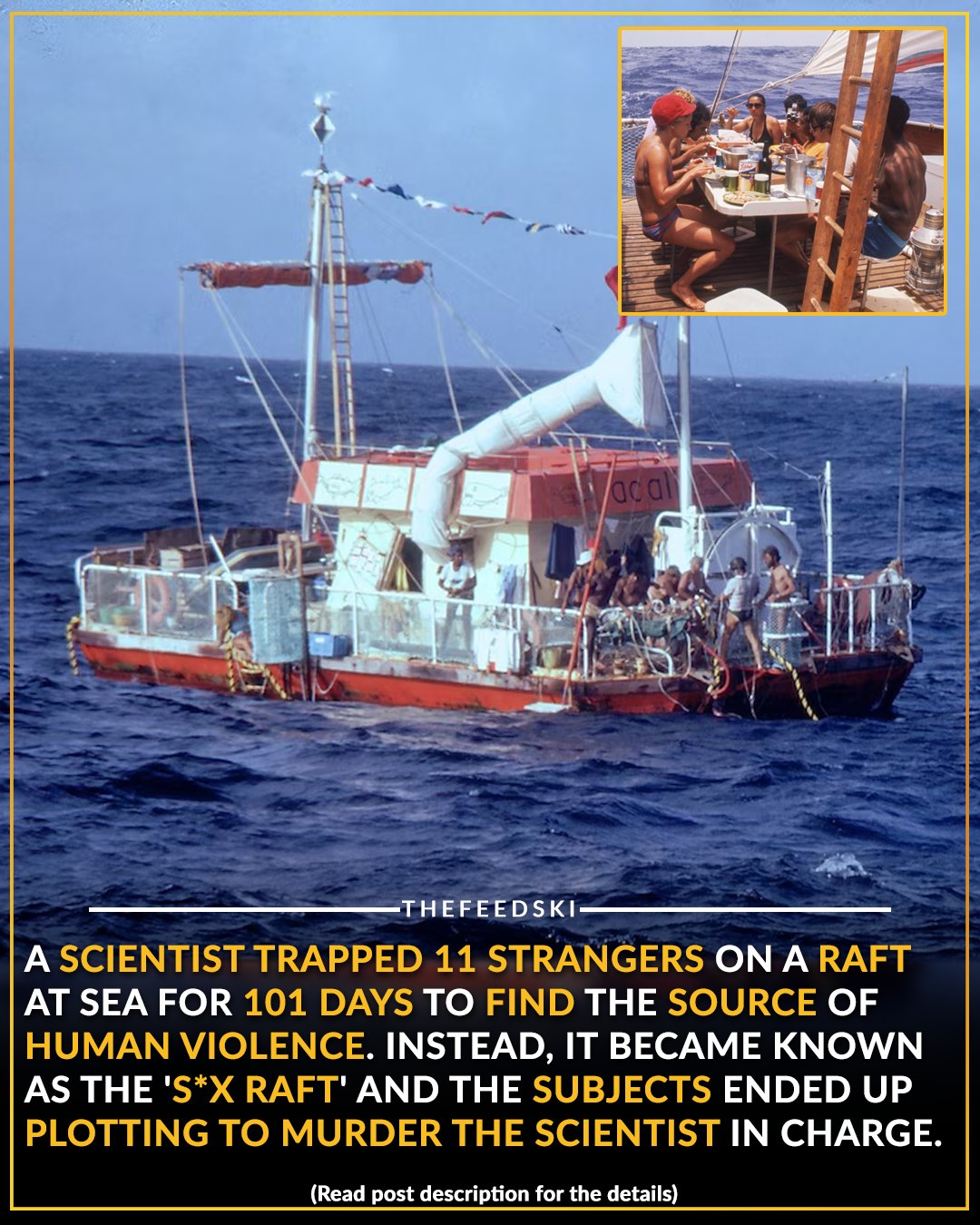
In 1973, Santiago Genovés launched a radical social experiment: 10 attractive strangers trapped on a tiny raft for 101 days across the Atlantic. His goal? To prove that human violence is an inevitable, “savage instinct” triggered by danger and sexual tension.

But a few weeks in, Santiago faced a “problem” he never expected: The group was perfectly peaceful. They weren’t fighting; they were bonding, cooperating, and navigating the vast ocean as a unified tribe.
The Twist: Furious that his hypothesis was failing, Santiago began manufacturing chaos. He played mind games, seized total command, and read private, anonymous diaries out loud to spark a rift.
It worked. He finally triggered violent thoughts—but not against each other. The group united in their hatred for him. They held a secret meeting to plot his murder, planning to toss his body overboard and call it an “accident.”

The Deep Lesson: The experiment was meant to prove humans are beasts. Instead, it proved something far more profound: Humans are naturally cooperative. Violence usually only erupts when a toxic authority figure tries to divide us.
